
Why a Scalable Website is Your Business’s Best Mate
Each year, hundreds of thousands of new businesses spring to life across Australia, each one fuelled by ambition and a great idea. For nearly all of them, a website is their digital front door, their primary sales tool, and their connection to the world. Yet, many build a site that’s fit for today, only to find it becomes a roadblock tomorrow. This is where scalability comes in, not as a technical buzzword, but as a core business strategy.
Defining Scalability in Plain English
Imagine you run a small local cafe that comfortably serves your regulars. One morning, a tour bus pulls up unexpectedly, and suddenly you have fifty people wanting a flat white. If your coffee machine breaks down and your staff are overwhelmed, that’s a non-scalable setup. A scalable website works the same way. It’s built to handle that sudden busload of visitors, whether they come from a viral social media post or a successful marketing campaign, without crashing or slowing to a crawl.
The Hidden Costs of a ‘She’ll Be Right’ Website
A cheap, quick website build often feels like a win, but the long-term costs can be crippling. We’ve all felt that flicker of frustration waiting for a page to load. When your site is slow, potential customers feel it too, and they leave. Worse, Google notices. Slow load times directly harm your search rankings, making it harder for new customers to find you in the first place. The real disaster strikes when your site crashes during a peak sales period, like a Boxing Day sale or a product launch. That’s not just lost revenue; it’s a blow to your brand’s reputation.
This is a common trap for many ventures looking for a scalable website for small business. The initial savings from a basic build are often wiped out when you’re forced into a complete, expensive rebuild just a year or two down the track. It’s like building a shack and then trying to turn it into a skyscraper; you have to tear it down and start again.
Connecting Scalability to Business Growth Milestones
Think about the real-world moments when scalability matters. It’s the boutique in Fitzroy that gets featured in a national magazine and suddenly needs to ship orders across the country. It’s the tradie in Western Sydney whose business takes off, requiring a complex online booking system to manage a growing team and client base. It’s the online publication that publishes a viral story and sees its subscriber count explode overnight.
In each of these scenarios, a scalable website isn’t just a nice-to-have; it’s the very thing that allows the business to seize the opportunity. Without it, the website becomes the bottleneck that chokes growth.
The User Experience Factor
Your website’s performance is a direct reflection of your brand. A slow, buggy, or crashing site feels unprofessional and erodes trust. We’ve all been there, trying to make a purchase on a glitchy site and eventually giving up. That feeling of annoyance is now associated with that brand. In contrast, a smooth, fast, and reliable experience, even during busy periods, builds customer confidence. It tells them you’re a professional, trustworthy operation. That loyalty is the lifeblood of any growing business. You can find more insights on our blog about how digital presence impacts business growth.
The Architectural Blueprint for a Growth-Ready Website
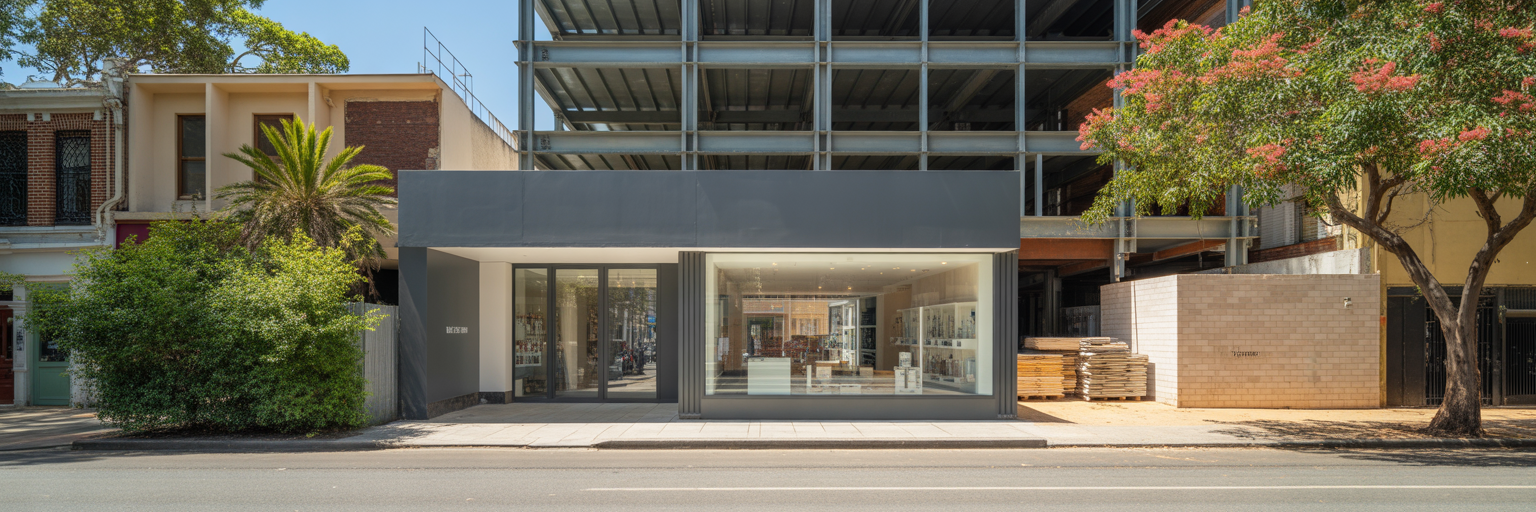
While the idea of scalability is about business growth, making it happen starts with the website’s technical foundation. You don’t need to be a developer to understand the key components. Thinking about your website’s architecture is like planning a house; you need a solid frame designed to support future extensions, not just the rooms you need today.
Understanding Your Website’s Backbone
A website’s architecture is its underlying structure, the digital equivalent of a building’s foundation and frame. A well-planned architecture ensures that as you add more pages, products, or features, the entire structure remains stable and organised. It’s what allows the site to handle pressure without collapsing. This isn’t just about performance. A well-organised site structure is also key for search engines, which is a core part of building topical authority with internal linking and content clusters to signal your expertise to Google.
The Role of a Content Delivery Network (CDN)
Think of a CDN as a network of mini-warehouses for your website’s data, scattered across the country. Instead of every visitor having to fetch information from your main server, which might be in Melbourne, a CDN stores copies of your site in multiple locations. This means a user in Perth can get your website’s content from a local server in Perth. The result? The site loads heaps faster for everyone, no matter where they are. This simple change dramatically improves user experience and takes a huge load off your main server.
Smart Caching to Reduce Server Strain
Caching is like your website’s short-term memory. When someone visits a page, the server has to assemble all the pieces: text, images, and code. Caching saves a temporary, pre-assembled copy of that page. The next time someone visits, the server can just deliver the saved copy instead of rebuilding it from scratch. It’s a simple but incredibly effective technique. This is one of the most powerful website performance optimisation tips because it allows your site to handle significantly more traffic without needing more powerful hardware right away.
Load Balancers: The Traffic Cops of Your Website
Ever been at Woolies during a rush and seen a manager open up a new checkout to ease the queues? A load balancer does exactly that for your website. When a traffic spike hits, instead of sending everyone to a single server, the load balancer acts as a traffic cop, distributing visitors across multiple servers. This prevents any one server from becoming overwhelmed and crashing. According to a guide on scalable web architecture, this distribution is fundamental to preventing crashes during high-traffic events.
Choosing the Right Hosting for Unpredictable Growth

After getting the architecture right, the next critical decision is where your website will live. Your hosting provider is the landlord of your digital property, and choosing the right one is fundamental to your ability to grow. For many businesses, this choice is the difference between seamless expansion and hitting a frustrating wall.
Moving Beyond Shared Hosting Limitations
Shared hosting is often the first step for new businesses because it’s cheap. Think of it as a crowded co-working space. You get a desk, but you’re sharing resources like the kitchen and internet with everyone else. The problem is the “noisy neighbour.” If another website on the same server gets a huge traffic spike, it can slow your site down, even if your traffic is normal. Shared hosting comes with strict resource limits that can quickly stifle a growing business.
Introducing Cloud Hosting: Your Flexible Foundation
This is where cloud hosting for startups Australia comes in. Instead of being stuck on one physical server, your website is powered by a network of connected servers. It’s like paying for electricity; you only pay for what you use. This elasticity is perfect for businesses with fluctuating traffic, like an e-commerce store with big sales events or a service business with seasonal peaks. This flexibility is why cloud platforms are considered vital for future-proofing, as they offer resource allocation that adapts to demand. It’s no surprise that our secure cloud storage is built on these same powerful principles of flexibility and security.
The Magic of Auto-Scaling
The best part of cloud hosting is a feature called auto-scaling. Imagine your website is featured on the evening news. Instead of you frantically calling your hosting provider, the system automatically detects the surge in traffic and assigns more server resources in real-time to keep your site fast and responsive. Then, once the traffic dies down, it scales back the resources. This ensures you can handle any amount of success without paying for peak-level capacity 24/7. It’s the ultimate safety net for ambitious businesses.
Managed Hosting vs. DIY: What’s Right for You?
With cloud hosting, you have two main paths. The DIY approach involves using platforms like Amazon Web Services (AWS) or Google Cloud. These are incredibly powerful but require deep technical expertise to set up, secure, and maintain. It’s like being given a commercial kitchen but having to be your own chef, plumber, and electrician. The alternative is a managed solution. When choosing a web development platform, an all-in-one provider like Digital Fusion Hub handles all the technical heavy lifting for you. We manage the servers, security, updates, and performance optimisation, so you can focus on running your business, not on becoming a part-time system administrator.
| Feature | Shared Hosting | DIY Cloud Hosting (e.g., AWS, Google Cloud) | All-in-One Platform (Digital Fusion Hub) |
|---|---|---|---|
| Performance | Inconsistent; affected by other sites | High, but depends on configuration | Optimised and consistently high |
| Scalability | Very limited; requires manual upgrades | Excellent; manual or auto-scaling | Seamless auto-scaling built-in |
| Technical Management | Minimal; controlled by provider | Requires expert knowledge (setup, security, maintenance) | Fully managed by experts |
| Cost Model | Low, fixed monthly fee | Pay-as-you-go; can be complex and unpredictable | Clear, predictable pricing for a complete solution |
| Best For | Personal blogs or brand new micro-businesses | Tech-savvy teams with dedicated IT staff | Ambitious startups and SMEs focused on growth |
Designing for Flexibility and a Seamless User Journey
A truly scalable website isn’t just about what happens behind the scenes with servers and code. It’s also about how the site is designed for the user. A flexible, thoughtfully designed front-end ensures your website can evolve with your business and continue to provide a great experience for your customers, no matter how much you grow.
Responsive Design is Non-Negotiable
The responsive web design importance cannot be overstated. Think about your own habits. You might browse a site on your laptop at home, check it again on your phone while on the train from Parramatta to the CBD, and make a purchase on your tablet later. With over half of all Australian web traffic now coming from mobile devices, a website that doesn’t look and work perfectly on a small screen is like locking the door on half your potential customers. It’s a fundamental requirement for any modern business.
Embracing a Modular Design System
Imagine building with LEGOs instead of trying to carve a sculpture from a single block of stone. That’s the idea behind a modular design system. Instead of designing every page from scratch, you create a library of reusable “blocks”—things like testimonial sections, product cards, call-to-action banners, and header styles. When you need to build a new landing page or add a new section to your site, you can simply pull from this library. This approach makes it incredibly fast and cost-effective to expand your website while ensuring everything stays consistent with your brand. This is a core principle of our web development services.
Prioritising an Intuitive Information Architecture (IA)
Your website’s Information Architecture is how its content is organised and structured. It’s like planning the aisles of your digital store. When you only have a few products, it’s easy for customers to find what they need. But as you add hundreds of products or dozens of blog posts, a logical structure becomes critical. A good IA ensures users can navigate your site intuitively without getting lost or frustrated. This directly impacts your business by lowering bounce rates, improving time on site, and ultimately, driving more conversions.
Accessibility as a Pillar of Good Design
A truly scalable website is one that is usable by everyone, including people with disabilities. This means designing with things like proper colour contrast for visually impaired users, ensuring the site can be navigated with a keyboard, and making it compatible with screen readers. This isn’t just an ethical obligation; it’s a smart business move. By making your site accessible, you expand your potential customer base to a wider audience. As noted by industry experts, clarity and compatibility are foundational to good design, and accessibility is a key part of both.
A Decoupled Approach for Ultimate Flexibility

For businesses with serious growth ambitions, there’s another layer of scalability to consider. While not necessary for everyone starting out, understanding the concept of a decoupled architecture can help you plan for the distant future. It’s about building a digital presence that’s not just scalable, but also incredibly adaptable to whatever comes next.
Introducing Headless and Decoupled Architecture
Think of a traditional website as an all-in-one package where the front-end (what users see, the “shop window”) and the back-end (where content is stored, the “stockroom”) are tightly connected. A decoupled, or “headless,” architecture separates these two. The back-end becomes a central content hub, and the front-end is just one of many possible ways to display that content. The “head” (the front-end) is detached from the “body” (the back-end).
The Key Benefit: Scale Different Parts Independently
The main advantage here is efficiency. Imagine your e-commerce function gets hammered with traffic during a massive sale, but your blog and corporate pages have normal traffic. With a decoupled setup, you can dedicate more server resources just to the e-commerce part of your system without affecting, or paying more for, the other parts. This allows for much more granular control over performance and costs. This approach, often using microservices, is a key strategy for high-growth teams looking for maximum resilience.
Future-Proofing for New Channels
This is where a decoupled approach really shines. Your central content stockroom isn’t just tied to your website anymore. It can feed content to any channel you can imagine: a mobile app, an in-store kiosk, a smartwatch application, or even a voice assistant skill for Amazon Alexa or Google Assistant. When a new technology emerges, you don’t have to rebuild your entire system. You just build a new “head” to display the content from your existing hub. It’s the ultimate way to prepare your business for a future you can’t yet predict.
Is a Decoupled Approach Right for Your Business?
Let’s be clear: this approach can be more complex and costly to set up initially. It’s not the right fit for every small business. It’s best suited for companies with ambitious, multi-channel growth plans or those who know they will need both a website and a mobile app from the get-go. For many Australian startups and SMEs, the most practical path is to start with a well-built, modular website. A platform like Digital Fusion Hub provides the perfect starting point, offering robust scalability for immediate needs while keeping the door open for more advanced architectures in the future.
Future-Proofing Your Digital Shopfront for the Long Haul
Building a scalable website isn’t a one-time task you can tick off a list. It’s an ongoing commitment. The digital world changes, your business evolves, and customer expectations grow. Adopting a mindset of continuous improvement is the only way to ensure your website remains a powerful asset for years to come.
Your Website is a Living Asset, Not a Finished Project
One of the biggest mistakes business owners make is adopting a “set and forget” mentality toward their website. A website is not a brochure that you print and leave on a shelf. It’s a living, breathing part of your business that requires regular care. This includes applying security patches, updating software, and checking for performance issues. This ongoing maintenance is a critical part of how to future-proof a website and ensure it continues to serve your business effectively.
The Importance of Continuous Monitoring and Testing
You can’t fix problems you don’t know exist. Being proactive is key. This means using tools to constantly monitor your site’s speed, uptime, and user behaviour. Are certain pages loading slowly? Are users dropping off at a specific point in the checkout process? Spotting these issues early allows you to fix them before they become critical. It’s also wise to perform load testing, which involves simulating a massive traffic spike in a controlled environment. This helps you find and fix weak spots before a real event brings your site down. A scalable website checklist should always include regular performance audits.
Planning for Future Integrations
As your business grows, you’ll inevitably want to connect your website to other tools. This could be a new Customer Relationship Management (CRM) system, marketing automation software, an inventory management platform, or an AI-powered chatbot. A scalable architecture is designed with this in mind, making it easy to “plug in” these new tools through APIs without needing a major, costly overhaul of your entire site. Thinking about these potential future needs from day one saves a lot of headaches later.
Security as a Core Component of Scalability
As your business and website grow, so does your appeal as a target for cyber threats. A security breach can be devastating, leading to data loss, financial damage, and a complete erosion of customer trust. Robust security isn’t an optional extra; it’s a fundamental part of a scalable strategy. This means having strong firewalls, performing regular malware scans, and ensuring all software is up to date. It’s also vital to use reliable antivirus and security software to protect all your digital assets, not just your website.
Bringing It All Together for Sustainable Aussie Growth

We’ve covered a lot of ground, from high-level strategy to the nuts and bolts of hosting and design. The central message is simple: the website you build today will either enable your future growth or constrain it. Making the right choices from the start is one of the most important investments you can make in your business’s future.
Recap of the Core Pillars of Scalability
A truly scalable website rests on a few key pillars working together. It starts with a solid technical architecture, using tools like CDNs and caching to ensure speed. It’s supported by flexible cloud hosting that can adapt to any traffic load. It’s brought to life with a modular, user-centric design that can evolve with your brand. And it’s maintained through ongoing monitoring and security to keep it healthy and secure for the long haul.
Scalability as a Strategic Business Decision
Viewing the investment in a scalable website as a “tech cost” is missing the point. It’s a strategic business decision. It’s an investment in your brand’s reputation, your customer experience, and your operational resilience. It’s the digital foundation that gives you the confidence to launch that big marketing campaign or chase that huge opportunity, knowing your business can handle the success that follows. It’s what gives you a genuine competitive edge.
The Value of a Digital Partner
Let’s be honest. For a busy Aussie founder or small business owner, trying to implement all these strategies is complex and time-consuming. Your time is better spent focusing on your products, your customers, and your core business. This is where a digital partner becomes invaluable. Digital Fusion Hub provides the all-in-one platform and the expert guidance to build and maintain a scalable website correctly from day one. We handle the technical complexities so you can focus on what you do best. If you have questions about how to get started, you can contact us directly.
Final Takeaway: Build for the Business You Want to Be
Ultimately, the choice is yours. You can build a website for the business you have today, or you can build the digital foundation for the successful, thriving enterprise you are working hard to become. Don’t let your digital shopfront be the thing that holds you back. Build for growth, build for resilience, and build for the future.