The Critical Role of SEO in Driving E-commerce Sales
For any Australian e-commerce business, organic search is not just a traffic source; it is the most substantial and sustainable driver of revenue. As research from Ignition Nova highlights, organic search is responsible for a significant portion of all e-commerce traffic, making it a non-negotiable focus for growth. While paid advertising can deliver short-term results, it is the credibility and momentum from well-executed e-commerce SEO strategies Australia that build long-term business value. A strong organic presence establishes trust with potential customers in a way that paid placements cannot replicate.
In the current digital marketplace, search engine optimisation has evolved far beyond simple keyword placement. A modern approach must be holistic, accounting for AI-powered search results, rich shopping snippets that appear directly on Google, and the entire customer journey. This means optimising from the moment a user becomes aware of a problem to the final purchase decision. This comprehensive strategy is not an option but a strategic necessity for any business aiming to compete effectively online.
Missed opportunities in e-commerce often stem from an incomplete understanding of how these elements work together. A visually appealing website is ineffective if it is invisible to search engines, and high traffic volumes are meaningless if they do not convert into sales. True success lies in integrating technical performance with persuasive content and a seamless user experience. This alignment ensures that you not only attract visitors but also guide them efficiently toward a purchase.
Mastering this discipline requires a focus on the core pillars of a successful e-commerce SEO strategy. These foundational components, which we will detail throughout this article, include technical site performance, on-page content optimisation, targeted local and mobile strategies, and advanced structural considerations for discoverability. By investing in these key areas, businesses can directly increase visibility, attract higher quality traffic, and achieve greater revenue. A partner with expertise across all comprehensive digital services ensures each pillar is built correctly, forming a cohesive and powerful growth engine.
Building a Technically Sound Foundation for Growth
The technical health of an e-commerce website is the bedrock upon which all other marketing efforts are built. Without a fast, secure, and accessible foundation, even the most compelling products and content will fail to reach their potential. Technical SEO is not a one-time task but an ongoing commitment to providing an exceptional user experience that both customers and search engines reward. It addresses the critical infrastructure that dictates how efficiently search crawlers can index your site and how smoothly users can navigate it.
The High Cost of a Slow Website
In e-commerce, speed is directly tied to revenue. Customers have little patience for slow-loading pages, and even minor delays can have a substantial impact on your bottom line. According to data from Shopify, a mere 100-millisecond delay in website load time can cause a significant drop in conversions. This illustrates a clear correlation: a faster site builds user trust and encourages purchases, while a slow one creates friction and drives potential customers to competitors. Every second saved is a direct investment in customer retention and sales performance.
Understanding Google’s Core Web Vitals
Google quantifies user experience through a set of metrics known as Core Web Vitals. These are not abstract technical benchmarks; they are direct indicators of how users perceive your site’s performance. Understanding and optimising for them is essential for ranking well and converting visitors. The same Shopify research found that sites with a fast Largest Contentful Paint (LCP) convert substantially better, proving their direct commercial impact.
| Metric | What It Measures | Target for Good UX | Business Impact of Poor Score |
|---|---|---|---|
| Largest Contentful Paint (LCP) | The time it takes for the largest visual element on the page to load. | Under 2.5 seconds | High bounce rates, lost sales, negative ranking signal. |
| Interaction to Next Paint (INP) | The responsiveness of the page to user interactions (e.g., clicks, taps). | Under 200 milliseconds | User frustration, perception of a broken or slow site, abandoned carts. |
| Cumulative Layout Shift (CLS) | The visual stability of the page during loading. | Under 0.1 | Accidental clicks, poor user experience, loss of trust. |
The Dominance of Mobile-First Commerce
With the majority of e-commerce traffic now originating from mobile devices, a mobile-first approach is mandatory. Google’s mobile-first indexing means it primarily uses the mobile version of your content for ranking and indexing. A poor mobile experience will therefore harm your visibility across all devices. Effective e-commerce site speed optimisation involves implementing responsive design that adapts seamlessly to any screen size, compressing images for faster loading on mobile connections, and ensuring all interactive elements are easily tappable. The goal is to provide a frictionless shopping experience for users on the go.
The Role of Secure and Reliable Hosting
Achieving these technical benchmarks is impossible without a robust hosting environment. Your hosting provider directly influences site speed, uptime, and security. A slow or unreliable server will undermine all your optimisation efforts, leading to poor Core Web Vitals scores and lost sales. Furthermore, security is paramount. A breach can destroy customer trust and result in significant financial and reputational damage. Partnering with a provider that offers secure cloud storage solutions ensures your site has the necessary infrastructure for optimal performance and uptime. This foundation must also be protected with professional antivirus and security software to safeguard your business and customer data from evolving threats.
Optimising Product and Category Page Content
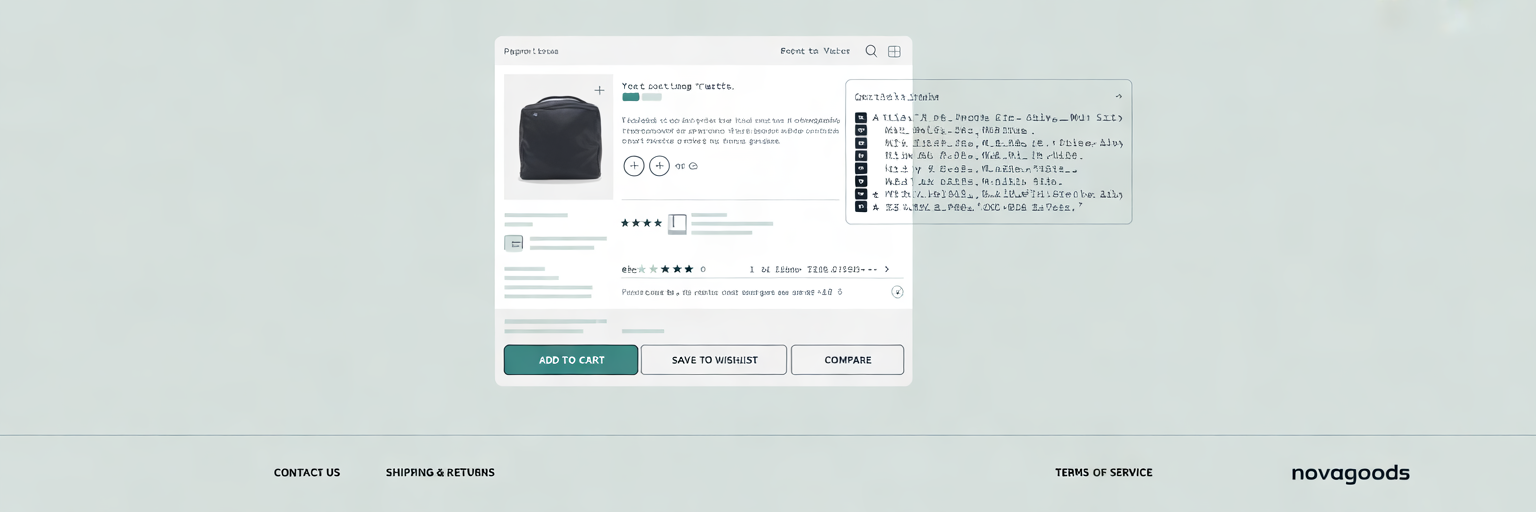
Once your technical foundation is solid, the next priority is the content on your product and category pages. These pages are the commercial heart of your e-commerce store, where browsing turns into buying. Effective content does more than just describe a product; it persuades, answers questions, and builds confidence, all while signalling relevance to search engines. Investing in high-quality, unique content for these pages is one of the most direct ways to improve rankings and conversion rates.
Moving Beyond Generic Product Descriptions
A common and costly mistake in e-commerce is using generic, manufacturer-supplied product descriptions. This practice creates duplicate content issues, as countless other retailers are using the exact same text. Search engines struggle to determine which version is the original, often resulting in lower rankings for everyone. More importantly, this generic copy fails to connect with your specific audience or highlight the unique benefits of purchasing from your store. The solution is to write unique, benefit-driven descriptions that address customer pain points, answer common questions, and naturally integrate relevant keywords. This transforms a simple product listing into a compelling sales pitch.
Transforming Category Pages into Content Hubs
Category pages are often underutilised, serving as simple grids of products. However, they represent a significant opportunity to capture users searching for broader terms, such as “women’s running shoes” or “outdoor dining sets.” By treating these pages as content hubs, you can attract and engage customers earlier in their buying journey. Adding 200 to 500 words of unique, helpful content at the top or bottom of the page can provide context, offer buying guidance, and establish your authority. This text should introduce the product range, explain key features, and help users navigate their options, turning a simple product listing into a valuable resource.
Leveraging Structured Data for Rich Snippets
Structured data, specifically Schema.org markup, is a powerful tool for making your listings stand out in search results. By adding this code to your pages, you provide search engines with explicit information about your products, including price, availability, and customer ratings. As noted by Ecomseo.co, this can result in enhanced listings known as rich snippets, which can increase click-through rates by 20-35%. Implementing product, review, and FAQ schema helps your listings command more attention on the search results page, driving more qualified traffic directly to your store. For more guidance on creating compelling content, you can explore the insights on our blog.
To ensure your product pages are fully optimised for both users and search engines, follow this comprehensive checklist.
Your Ultimate Product Page SEO Checklist
- Unique and Persuasive Title Tag: Craft a compelling title that includes the product name and primary keyword.
- Benefit-Oriented Meta Description: Write a meta description that encourages clicks by highlighting key benefits.
- High-Quality Images and Video: Use multiple high-resolution images with descriptive alt text that includes relevant keywords.
- Unique Product Description: Write at least 300 words of unique content focusing on benefits and answering user questions.
- Clear Pricing and Availability: Display the price, stock status, and any special offers prominently.
- Customer Reviews and Ratings: Integrate genuine customer reviews to build social proof and trust.
- Strong Call-to-Action (CTA): Use a clear and visible “Add to Cart” or “Buy Now” button.
- Transparent Shipping and Returns Information: Clearly state shipping costs, delivery times (e.g., via Australia Post), and your return policy.
- Product Schema Markup: Implement structured data to be eligible for rich snippets in search results.
Advanced SEO for Large E-commerce Catalogues
As an e-commerce store grows, so does its complexity. Managing a large catalogue with thousands of products presents unique SEO challenges that, if left unaddressed, can severely limit visibility and growth. Issues like indexation bloat, diluted authority, and poor discoverability are common. However, with a strategic approach to site architecture and technical management, these challenges can be transformed into competitive advantages. For large retailers, mastering advanced SEO is essential for ensuring every product has a chance to be discovered by potential customers.
Managing Faceted Navigation and Indexation Bloat
Faceted navigation, which allows users to filter products by attributes like size, colour, or brand, is crucial for user experience. However, it can create a significant SEO problem by generating thousands of low-value, near-duplicate URLs. When search engines crawl these countless variations, it consumes their crawl budget and dilutes your site’s ranking authority. The best-practice solution is to use canonical tags to point these filtered URLs back to the main category page. This consolidates ranking signals while still allowing you to selectively index high-value filtered pages, such as “red running shoes,” that attract significant search traffic.
The Power of a Strategic Internal Linking Architecture
Internal linking is a high-impact tactic that is often overlooked. A strategic internal linking architecture does more than just help users navigate your site; it distributes “link equity” or ranking power throughout your pages and helps search engines understand the relationships between them. As data from Ecom Experts shows, pages with a healthy number of internal links receive significantly more traffic. In contrast, “orphaned pages” with few or no internal links are often ignored by search engines. A well-structured site, like our product key catalogue, ensures all pages are discoverable. Practical strategies include:
- Linking from Category Descriptions: Add links from your category page content to your most important subcategories or top-selling products.
- Implementing “Related Products” Sections: Use automated or curated “related products” and “customers also bought” sections on product pages to link to other relevant items.
- Leveraging Blog Content: Write blog posts that address customer problems and link contextually to the products that solve them.
- Using Breadcrumb Navigation: Implement breadcrumbs to show users their location on the site and provide a clear, hierarchical linking structure.
Ensuring Comprehensive Discovery with XML Sitemaps
While a strong internal linking structure is the primary way search engines discover your content, an XML sitemap acts as a crucial supplement. A sitemap is a file that lists all the important URLs on your website, providing a direct roadmap for search engine crawlers. For large e-commerce sites with deep product catalogues, a well-maintained and dynamically updated sitemap is essential. It helps ensure that new products are discovered quickly and that all valuable pages are indexed, complementing your internal linking efforts to guarantee comprehensive site discovery.
Capturing Local and On-the-Go Customers

For Australian retailers with a physical presence, a localised digital strategy is a powerful differentiator. The line between online and offline shopping is increasingly blurred, with customers routinely using their smartphones to find products and stores nearby. By optimising for local search, businesses can capture high-intent customers who are actively looking to make a purchase. This requires a targeted approach that connects your digital presence with your physical footprint, turning online discovery into in-store sales.
Optimising for ‘Near Me’ Searches with Google Business Profile
The rise of “near me” searches has made local SEO indispensable. The cornerstone of any effective local SEO for online stores strategy is a fully optimised Google Business Profile (GBP). This free tool allows you to manage how your business appears on Google Search and Maps. It is critical to ensure your Name, Address, and Phone Number (NAP) information is accurate and consistent across your GBP and all other online directories. A complete profile, featuring high-quality photos, business hours, services, and customer reviews, significantly increases your chances of appearing in the local map pack for relevant searches.
Bridging Online Discovery and Offline Sales
A key advantage for businesses with physical locations is the ability to show in-store product availability directly in local search results. As detailed in guides from Ignition Nova, by submitting a product feed to Google Merchant Center and enabling local inventory ads, you can let nearby shoppers know you have the exact item they are looking for in stock. This feature is incredibly powerful for capturing high-intent customers who are ready to buy immediately. It effectively bridges the gap between online search and offline commerce, driving foot traffic directly to your store.
The Mobile Experience for the Local Shopper
The local customer journey is predominantly mobile. A shopper might search for a product on their phone while out and about, check for local availability, and then use their device for directions to the store. Therefore, your mobile website must be optimised for this experience. This means ensuring fast load times, implementing click-to-call buttons so users can easily contact you, and integrating with map applications to provide seamless directions. A frictionless mobile experience is essential for converting local search interest into a physical visit. If you need help optimising your local presence, feel free to contact our team for expert guidance.
To enhance your local visibility, implement these actionable tips:
- Gather Google Reviews: Actively encourage satisfied customers to leave reviews on your Google Business Profile to build trust and improve rankings.
- Create Location-Specific Landing Pages: If you have multiple locations, create a unique page for each one (e.g., “Computer Repairs in Geelong”) with localised content.
- Mention Local Suburbs and Landmarks: Weave the names of local suburbs, streets, or well-known landmarks into your website content to build geographic relevance.
- Publish Local Content: Write blog posts about local events, community news, or guides that are relevant to your local audience.
Strategies for International E-commerce Expansion
For ambitious Australian businesses, expanding into international markets is a logical next step for growth. However, selling globally introduces a new layer of complexity to your SEO strategy. Simply making your website available to international visitors is not enough. A successful international expansion requires careful technical planning and a deep understanding of localisation to ensure you can effectively reach, engage, and convert customers in different regions. Getting this right from the outset prevents costly mistakes and sets the stage for sustainable global growth.
Technical Signals for Global Audiences
When targeting multiple countries, especially those that share a language like the UK or the US, you must provide clear signals to search engines about which version of your site is intended for which audience. The essential tool for this is the `hreflang` attribute. As explained in a detailed guide by ResultFirst, this small piece of code tells search engines which regional URL to show to a user based on their language and location. Properly implementing `hreflang` tags prevents duplicate content issues and ensures that users are directed to the most relevant version of your page, improving their experience and your search performance.
Localisation: More Than Just Translation
True localisation goes far beyond simply translating your website’s text. It involves adapting the entire user experience to meet the cultural and logistical expectations of each target market. This is critical for building trust and reducing friction in the buying process. Key elements of localisation include displaying prices in the local currency, offering familiar payment methods (e.g., Afterpay in Australia but Klarna in Europe), and providing clear, region-specific shipping details and costs. Every aspect of the customer journey should feel native to the user, assuring them that you are a credible and reliable international seller.
Choosing the Right International URL Structure
One of the most important technical decisions you will make is how to structure your URLs for different regions. There are three primary options, each with its own advantages and disadvantages:
- ccTLDs (Country-Code Top-Level Domains): Using separate domains like `yourstore.com.au` and `yourstore.co.uk`. This provides the strongest geographic signal but is the most expensive and complex to manage.
- Subdomains: Using regional prefixes like `au.yourstore.com` and `uk.yourstore.com`. This is easier to set up but can sometimes dilute domain authority.
- Subdirectories: Using folders like `yourstore.com/au/` and `yourstore.com/uk/`. This is often the most manageable and SEO-friendly option for businesses starting their international journey, as it consolidates authority on a single domain.
International SEO is a complex, long-term strategy that requires expert planning. Partnering with a digital expert ensures the technical foundation is correctly established from the beginning, preventing issues that can be difficult and expensive to fix later.
Preparing for the Future of Search in Commerce

The world of search is in a constant state of change, driven by advancements in artificial intelligence and evolving user behaviours. While it is impossible to predict every future algorithm update, businesses can prepare by focusing on the enduring principles of good SEO. A forward-thinking strategy is not about chasing short-term tactics but about building a resilient foundation based on authority, user experience, and high-quality content. This approach ensures your business is well-positioned to adapt and thrive, no matter how search evolves.
Optimising for AI-Generated Answers
The introduction of technologies like Google’s Search Generative Experience (SGE) is changing the search landscape. The goal is shifting from simply ranking number one to becoming the authoritative source that AI models use to construct their answers. This requires creating content that is comprehensive, well-structured, factually accurate, and trustworthy. By positioning your website as a definitive resource in your niche, you increase the likelihood that your information will be featured in AI-generated summaries, capturing visibility at the very top of the search results.
Mastering the Full Path to Purchase
A successful e-commerce strategy must address the entire customer journey, not just the final transaction. This is central to the question of how to improve e-commerce sales. Customers move through various stages, from initial awareness to final purchase, and your content should support them at each step. This means creating:
- Informational Content: Blog posts and guides that answer broad questions (e.g., “what is the best type of coffee bean?”).
- Comparison Content: Articles and charts that compare different products or brands (e.g., “Arabica vs. Robusta beans”).
- Transactional Content: Optimised product and category pages that make it easy to purchase (“buy organic Arabica coffee beans”).
This full-funnel approach captures customers at every stage, building trust and guiding them toward a sale.
The Rise of Visual and Voice Search
User behaviour continues to diversify, with visual and voice search gaining prominence. To prepare for this shift, businesses must optimise beyond traditional text-based queries. For visual search, this means using high-quality, unique images with descriptive file names and alt text, allowing search engines to understand what an image depicts. For voice search, it involves structuring content in a conversational, question-and-answer format that aligns with how people speak. Answering common questions clearly and concisely makes your content more likely to be selected as the answer for a voice query.
Ultimately, the best preparation for the future is a commitment to the core principles of quality. A technically sound website, a seamless user experience, and valuable, authoritative content will always be rewarded by search engines and customers alike.
Implementing a Winning E-commerce SEO Strategy
Throughout this article, we have explored the essential components of a powerful e-commerce SEO strategy. Success hinges on integrating a fast and secure technical foundation, compelling on-page content, a smart internal linking architecture, and a targeted approach to local and mobile customers. Implementing and managing such a comprehensive strategy requires significant expertise, time, and continuous effort. The digital marketplace is competitive, and maintaining visibility demands constant monitoring, analysis, and adaptation.
This complexity should not be seen as a deterrent but as a significant competitive opportunity. Businesses that execute a professional SEO strategy correctly can build a sustainable advantage that drives long-term growth. The solution is to partner with an all-in-one digital services provider that can manage every aspect of your online presence. Such a partnership simplifies the entire process, with experts handling everything from secure cloud hosting and website development to ongoing SEO and content creation. This allows you to focus on your core business operations with the confidence that your digital growth is in capable hands.
A comprehensive digital partner also ensures you have access to all the necessary tools to operate efficiently, including essential software licenses for products like Windows 11 Pro or advanced security suites. This integrated approach ensures all parts of your digital ecosystem work together seamlessly. If you are ready to unlock your e-commerce growth potential and implement effective e-commerce SEO strategies Australia, we invite you to contact Digital Fusion Hub for an expert consultation. A strategic investment in professional SEO is an investment in the future success of your business.