

The way Australians consume information has fundamentally shifted. Platforms like TikTok and YouTube are no longer just for entertainment; they have reshaped our expectations for how brands communicate. For a small business in 2026, a website without video feels like a shop with the blinds drawn. It’s time to open them.
The Undeniable Pull of Video for Modern Customers
Before we talk about metrics and conversions, it’s important to understand why video works so well. Its power isn’t just technical; it’s deeply rooted in human psychology and our modern, fast-moving culture. It’s about connection, not just content.
The Psychology of Visual Storytelling
Our brains are wired for visual information. We process images and moving pictures far more efficiently than text, which makes video a shortcut to understanding and memory. Think of a busy commuter on a Sydney train. They are far more likely to absorb a one-minute brand story on their phone than to read a 500-word article. Video delivers the message with an emotional punch that text alone often struggles to match, making your brand more memorable long after the screen is off.
Meeting 2026 User Expectations
What was once a novelty is now a baseline expectation. Today’s customers, particularly younger demographics, expect to see video. It’s how they learn, review products, and connect with creators. A website that relies solely on text and static images can feel dated or, worse, less transparent. The absence of video can create a subtle sense of distrust, making a potential customer question if the business is current and confident in its offerings.
How Video Builds Trust and Authenticity
Trust is the currency of local business. Video is one of the most effective ways to build it. When you show the faces behind your brand, you create a human connection that advertising slogans can’t replicate. A short clip of a baker in a Marrickville workshop explaining their sourdough process, or a mechanic showing the detail in their work, does more than just showcase a service. It reveals passion and expertise. This kind of transparency makes customers feel like they know you, which is a powerful foundation for loyalty. Building that professional image requires a suite of tools, and our comprehensive digital services are designed to help businesses present themselves with confidence.
Video’s Role in the Mobile-First World
Most of your customers are browsing on their phones, whether they’re waiting for a flat white in a Melbourne laneway or killing time between meetings. This mobile-first reality is perfectly suited for video. Short, sharp, vertical videos are designed for on-the-go consumption. They fit the screen, capture attention quickly, and deliver a complete message in under a minute. For any Aussie enterprise, creating effective video content for small business means thinking about these mobile moments and delivering value that fits seamlessly into a customer’s busy day.
How Video Directly Impacts Your Website’s Performance Metrics

While the psychological pull of video is clear, its true business value is revealed in the numbers. Integrating video isn’t just about looking modern; it directly influences key performance metrics that search engines like Google use to rank your site. It’s a strategic move that pays measurable dividends.
Increasing Dwell Time and Reducing Bounce Rates
Dwell time is simply how long a visitor stays on your page. A longer dwell time signals to Google that your content is valuable and engaging. Video is a magnet for attention. When a visitor presses play, they are committing to staying on your page for at least a little while longer. This is one of the most effective ways to increase website dwell time and reduce the chance that users will “bounce” back to the search results, which can harm your rankings.
The Direct Link Between Video and SEO Success
The connection between video and search engine optimisation is undeniable. According to a report from Green Frog Labs, web pages with embedded video are 53 times more likely to achieve a first-page Google ranking. Why? Because Google prioritises rich, engaging content. Furthermore, when your video appears as a thumbnail in search results, it stands out visually and entices more clicks. A higher click-through rate tells Google your result is relevant, further boosting your authority.
Boosting Conversion Rates Across the Board
Video doesn’t just attract visitors; it persuades them to act. The same Green Frog Labs analysis found that adding a video to a landing page can increase conversions by over 80%. Imagine a Gold Coast real estate agent using a walkthrough video to give potential buyers a true feel for a property. Or consider a Perth-based e-commerce store using a short demo to show exactly how their product solves a problem. Video answers questions, overcomes hesitation, and gives customers the confidence they need to click “buy now” or “book a consultation.”
Enhancing User Experience (UX)
Ultimately, all these metrics point to one thing: a better user experience. Video makes your website more dynamic, informative, and easier to navigate. It can break up long blocks of text, explain complex ideas simply, and guide visitors on a clear journey. A positive UX is a critical ranking factor in itself. To truly improve website engagement with video, it must be integrated seamlessly. This is where a professionally built site makes all the difference, ensuring videos load quickly and complement the design. The foundation for this is a well-structured website, which is at the core of everything we build at Digital Fusion Hub.
Choosing the Right Types of Video for Your Business Goals
Not all videos are created equal. The type of video you create should be directly tied to what you want to achieve. Are you trying to build trust, drive a sale, or establish yourself as an expert? By matching the format to the goal, you can create content that delivers real results for your Aussie business.
For Building Trust: Testimonials and Brand Stories
Nothing builds credibility like a happy customer. A video testimonial, where a real client shares their positive experience, is social proof in its most powerful form. It’s authentic and relatable. Similarly, a brand story video that introduces your team and your mission helps humanise your business. For an audience that increasingly values supporting local, showing the real people and passion behind your work is invaluable.
For Driving Sales: Product Demonstrations and Unboxing Videos
When a customer can’t physically touch a product, video is the next best thing. A product demonstration that shows your item in action answers questions and manages expectations. It highlights benefits in a way static photos cannot. This is especially true for software or complex products. An unboxing video can also build anticipation and showcase the quality of your packaging and presentation, turning a simple purchase into an experience.
For Educating Your Audience: Explainer and How-To Videos
Positioning your business as a helpful expert is a proven way to build a loyal following. Explainer videos break down complex services or concepts into simple, digestible animations or presentations. A Brisbane-based accounting firm, for example, could create short how-to videos on tax tips for sole traders. This provides genuine value, builds authority, and keeps your brand top-of-mind. When you consistently offer useful information, customers will turn to you when they’re ready to buy, and you can find more content ideas on our blog.
For Boosting Engagement: Behind-the-Scenes and ‘Meet the Team’ Videos
People are curious. They love seeing how things are made and who is behind the brand they support. Behind-the-scenes content offers a glimpse into your daily operations, creating a sense of transparency and community. A ‘meet the team’ video, even a casual one, puts a face to the name and makes your business more approachable and relatable. This type of content is perfect for social media and helps build a stronger connection with your audience.
| Video Type | Primary Goal | Best For | Key Success Factor |
|---|---|---|---|
| Testimonial / Brand Story | Build Trust & Credibility | Service-based businesses, high-value products | Authenticity and genuine emotion |
| Product Demonstration | Drive Sales & Conversions | E-commerce, software (SaaS), complex products | Clarity and highlighting benefits |
| Explainer / How-To | Educate & Build Authority | Complex services, B2B, content marketing | Simplicity and solving a specific problem |
| Behind-the-Scenes / Meet the Team | Boost Engagement & Humanise Brand | All businesses, social media content | Relatability and personality |
Technical Best Practices for Embedding Video Without Slowing Your Site

The biggest fear for many businesses is that adding video will grind their website to a halt. It’s a valid concern. A slow site frustrates users and hurts your search rankings. Fortunately, with the right approach, you can have the best of both worlds. Here are some essential website video optimisation tips to ensure a fast, smooth experience.
The Importance of Video Compression
A raw video file straight from a camera is enormous. Uploading it directly to your website is like trying to send a house through the mail. It will cripple your page load speed. Video compression is the process of shrinking the file size while maintaining acceptable quality. It’s a non-negotiable first step before any video goes on your site. Numerous online tools and software can handle this for you, reducing file sizes dramatically.
Choosing the Right Video Format and Hosting
Not all video formats are built for the web. While MP4 is widely supported, formats like WebM often offer superior compression and quality for the file size. The next question is where to host the video. Self-hosting gives you control but can strain your server. Using a third-party platform like YouTube or Vimeo offloads the bandwidth burden. For professional use, a dedicated solution is best. Our secure cloud hosting solutions include features like a Content Delivery Network (CDN), which stores your video on servers across Australia to ensure lightning-fast delivery to every visitor, no matter their location.
Implementing Lazy Loading for Videos
Lazy loading is a clever technique that dramatically improves initial page speed. Instead of loading every element on a page at once, it defers the loading of certain items, like videos, until the user scrolls down to them. This means your page appears to load almost instantly. As noted by experts at Vibbit, this directly improves Google’s Core Web Vitals, such as Largest Contentful Paint (LCP), which are critical for a good user experience and strong SEO performance.
Optimising with a Custom Thumbnail and Avoiding Autoplay
Have you ever landed on a page and had a video start blaring at you? It’s disruptive and a sure way to make visitors leave. Autoplay with sound is almost always a bad idea. Instead, give the user control. Create a compelling, high-quality custom thumbnail that teases the content of the video and makes them want to click play. A great thumbnail acts as a mini-advertisement for your video, encouraging engagement on the user’s terms.
Here is a simple checklist for how to add video to website Australia correctly:
- Compress your video file before uploading to reduce its size without significant quality loss.
- Choose a web-optimised format like WebM or a highly compressed MP4.
- Use a professional hosting solution with a Content Delivery Network (CDN) for fast delivery.
- Implement ‘lazy loading’ so the video only loads when it’s visible on the screen.
- Create a custom, engaging thumbnail to entice clicks instead of using autoplay.
Strategic Placement of Videos for Maximum Impact
Once your video is optimised, the next question is where to put it. Placing a video in the right spot on your website can dramatically amplify its impact. Each location serves a different strategic purpose, guiding your visitor from first impression to final conversion.
The Homepage Hero Section
Your homepage is your digital front door. A “hero” video, placed prominently at the top of the page, is your chance to make a powerful first impression. In just 30 to 60 seconds, you can communicate your brand’s core value proposition, create an emotional connection, and show visitors exactly what you do. It’s the quickest way to answer the question, “Am I in the right place?”
On Landing Pages to Drive Action
A landing page has one job: to convert. Whether you want a visitor to sign up for a newsletter, download a guide, or book a demo, a video can be your most persuasive tool. On a landing page, the video should be laser-focused on the desired action. A short explainer or a testimonial that reinforces the offer can provide the final nudge a visitor needs to take the next step.
Within Blog Posts to Enhance Content
Long-form blog posts are excellent for SEO, but walls of text can be intimidating. Embedding relevant videos within your articles breaks up the content, making it more digestible and engaging. A how-to video can demonstrate a concept you’re writing about, or a short interview clip can add an expert voice. This not only increases dwell time but also provides a richer, more valuable experience for your reader. As AI-driven search algorithms evolve, RoastWeb notes that by 2026, they will increasingly favour pages with well-integrated, helpful video content.
On Product Pages to Increase Sales
For any e-commerce business, the product page is where the sale is won or lost. High-quality photos are essential, but a video can be the deciding factor. A 360-degree view of a product, a demonstration of it in use, or a clip showing its scale can answer critical customer questions and build purchase confidence. This clarity not only increases sales but can also reduce returns, as customers know exactly what they’re getting. It’s the perfect way to showcase the quality of items in our online shop.
Creating Compelling Video Content on a Small Business Budget
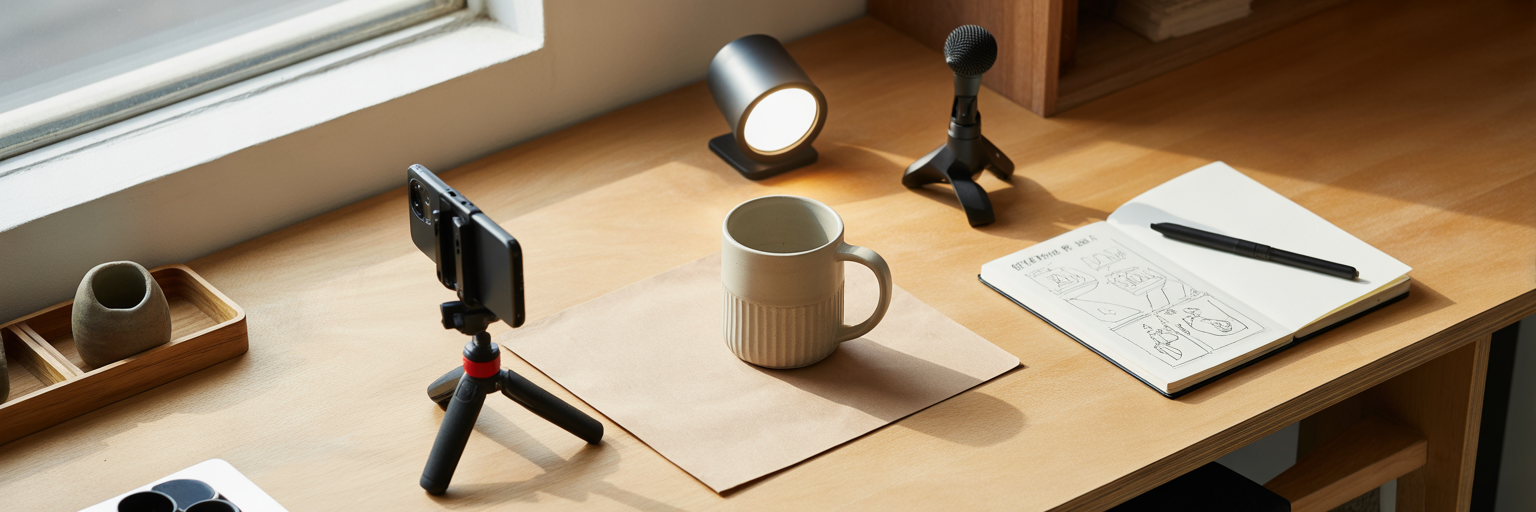
The idea of video production can feel intimidating, conjuring images of expensive cameras and complex software. But in 2026, creating professional-looking video is more accessible than ever. You don’t need a Hollywood budget to create content that connects with your audience and grows your business.
Leveraging the Power of Your Smartphone
The high-definition camera in your pocket is one of the most powerful content creation tools you own. Modern smartphones can shoot stunning 4K video. The key to a professional look isn’t the camera itself, but how you use it. Simple techniques like using a tripod for stability, filming in a well-lit space, and using an inexpensive lapel microphone for clear audio can make a world of difference.
Simple and Affordable Editing Tools
You don’t need to be a professional editor to create clean, effective videos. There is a wide range of user-friendly editing software available, from free mobile apps to affordable desktop programs. The goal is not to add flashy special effects, but to make clean cuts, add simple text overlays or your logo, and ensure the final product is polished and easy to watch. Many of the essential design and development tools you need can be found with our software license solutions.
Planning Your Content for Efficiency
The most common mistake in DIY video is a lack of planning. Just as you wouldn’t build a house without a blueprint, you shouldn’t shoot a video without a plan. A simple shot list or a rough storyboard outlining what you want to capture and say will save you immense time and frustration. Consider “batching” your content: dedicate one afternoon to filming several short videos at once. This efficiency is key for busy business owners.
- Use a tripod or stable surface to avoid shaky footage.
- Film in a well-lit area, using natural light whenever possible.
- Invest in an inexpensive lapel microphone for crisp, clear audio.
- Plan your shots beforehand to ensure you capture everything you need.
- Keep videos short and focused on a single message.
When to Call in the Pros (Without Breaking the Bank)
While DIY video is fantastic for social media and blog content, there are times when a professional touch is worth the investment. Your main brand story video or a high-stakes product launch may require a higher level of production quality. This doesn’t have to break the bank. At Digital Fusion Hub, our video creation services are designed to provide small businesses with affordable, high-quality video assets that make a lasting impression.
Measuring Your Video’s Success and Refining Your Strategy
Creating and publishing a video is only half the battle. To truly make video a strategic part of your business, you need to understand how it’s performing. By tracking the right metrics, you can learn what resonates with your audience and continually refine your approach for better results.
Key Metrics to Track
Move beyond simple view counts. The most insightful metrics tell you how people are interacting with your content. Play Rate shows what percentage of visitors clicked play, indicating how compelling your thumbnail and placement are. Audience Retention graphs reveal where viewers are dropping off, helping you identify boring spots. Click-Through Rate on any in-video links or calls-to-action shows if your video is successfully driving action.
Connecting Video Views to Business Goals
The ultimate measure of success is whether your videos are contributing to your bottom line. Using tools like Google Analytics, you can track the journey of users who watch your videos. Do they go on to visit a product page, fill out a contact form, or make a purchase? By setting up conversion goals, you can directly connect video engagement to tangible business outcomes and demonstrate a clear return on investment.
Using A/B Testing to Optimise
You don’t have to guess what works best. A/B testing is a simple way to compare two versions of something to see which one performs better. For video, you could test two different thumbnails to see which gets a higher play rate. You could try a different call-to-action at the end of your video or even test different video lengths. Small, iterative tests provide data-driven insights to improve your strategy over time.
Gathering Qualitative Feedback
The numbers only tell part of the story. The comments section on your videos and the questions customers ask after watching are a goldmine of qualitative feedback. This feedback tells you what your audience is thinking, what they’re confused about, and what they want to see more of. Listening to your audience is one of the best ways to generate ideas for future content that you know will be valuable.
Video is no longer an optional extra; it’s a core component of a successful digital strategy. From building trust to driving sales, it offers a powerful way to connect with your audience and grow your business. If you’re ready to put these strategies into action, get in touch with our team today to discuss how we can help.